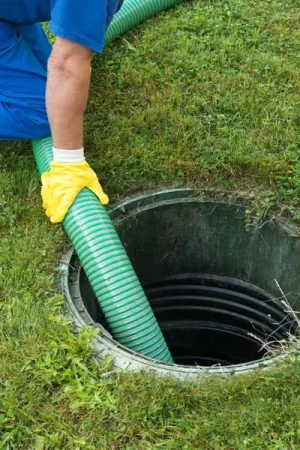


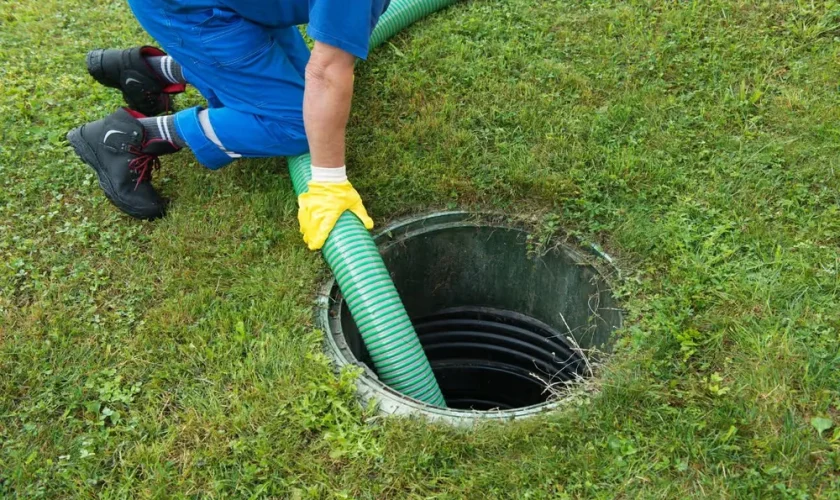
Your septic tank is the most expensive appliance you never think about, until the day the drain field turns into a swamp and the cleanup bill hits five figures. The good news? Pumping it on a sensible schedule eliminates almost all of that risk. The standard advice you hear, “every three years,” is a decent baseline, but it’s wrong for plenty of homes. Here’s the straight answer: for a typical 3 bedroom house with a 1,000 gallon tank, plan on pumping every 3 to 5 years. Smaller tanks, bigger households, and garbage disposals all pull that number down. Let’s walk through the actual math so you can set a date and stop guessing.
What Actually Determines Your Pumping Schedule
Three variables control how fast your tank fills up: household size, tank volume, and what you flush down the drains. The first two are easy to measure. The third, habits, is where most people secretly sabotage their own system.
Here’s the simple version. A tank works by holding wastewater long enough for solids to settle at the bottom and fats to float to the top. The middle layer, the liquid, flows out to the drain field. Pumping removes the sludge layer that builds up on the floor of the tank. When that sludge gets deep enough to reach the outlet pipe, solid waste starts clogging your drain field, and drain field repairs run anywhere from $3,000 to $10,000. That’s the failure you’re trying to avoid.
The Environmental Protection Agency (EPA) publishes a practical sizing chart for this exact scenario, and their guidance confirms that a 1,000 gallon tank serving a 3 bedroom home with average water use needs service every 3 to 5 years epa.gov (2024). Use their chart as your starting point, then adjust for the specific conditions below.
Your Home Size Cheat Sheet
This table gives you a realistic schedule based on tank size and the number of people living in the house. It assumes normal water use, no garbage disposal, and no heavy guests.
| Tank Size (gallons) | People in Home | Recommended Pumping Frequency |
|---|---|---|
| 500 to 750 | 1 to 2 | Every 2 to 3 years |
| 750 to 1,000 | 2 to 3 | Every 3 years |
| 1,000 | 4 | Every 2 to 3 years |
| 1,000 | 5 to 6 | Every 1 to 2 years |
| 1,500 | 4 to 5 | Every 3 to 5 years |
| 1,500 | 6+ | Every 2 years |
Household size matters more than the number of bedrooms, because the bedrooms dictate the tank size when the house was built, but the people dictate the actual volume. If your in-laws moved in last year, your pumping date moves up by a full year. That’s not a guess, that’s just the arithmetic of wastewater.
Why Garbage Disposals Break the Math
A garbage disposal turns food scraps into a slurry that flows straight into your tank. Those scraps are mostly organic solids, which means they add directly to the sludge layer that requires pumping. If you run a disposal daily, you can add 20 to 30 percent more solids to your tank every year.
My honest recommendation? If you have a garbage disposal and you actually use it, cut the schedule from the table above in half. A 1,000 gallon tank with a family of four and a daily disposal should get pumped every 18 to 24 months. It feels early, but the alternative, a clogged drain field, is a much worse conversation to have with your wallet.
And here’s a counterintuitive tip. You don’t need “septic safe” additives or enzyme treatments. Studies and industry practice show these products do almost nothing to reduce the need for pumping. The only thing that reliably removes sludge is a pump truck. Save your money for the actual service call.
How To Find Your Tank Size and Current Sludge Level
You can’t set a schedule without knowing your tank’s size, and most homeowners have no idea. Here are three ways to figure it out.
First, check your property records or the original building permit. Newer homes often have the tank size stamped on the permit. Second, open the lid and measure. The dimensions of the concrete or plastic tank tell you the volume, and a quick tape measure gives you length, width, and depth. Third, just ask the pumper when they arrive. A professional can tell you the capacity within minutes of opening the lid.
The smarter move, though, is to have the pumper measure the sludge depth during every service and give you the number. That transforms your schedule from a wild guess into a data point. If the sludge layer is at 25 percent of the tank depth, you’re fine. If it’s at 40 percent, you’re due soon. Keep those records for your own home file, they’re gold when you sell the house.
Warning Signs That Your Schedule Is Off
Even the best schedule gets thrown off by a vacation rental, a leaky toilet, or a plumbing accident. Watch for these four signals that your tank needs attention ahead of schedule.
- Slow drains across multiple fixtures, not just one, because the tank is full and can’t accept more water.
- Gurgling sounds from the toilet or sinks after a flush, which means air is being pushed back through the system.
- Standing water or unusually green, spongy grass over the drain field, which indicates effluent is surfacing instead of absorbing.
- A sewage smell inside the house or in the yard near the tank, that’s the tank telling you it’s past due.
If you notice any of these, call a local professional and book a service inspection. Waiting another month to “see if it clears up” is the most expensive decision a homeowner can make. For context on how long these systems are designed to last with proper care, the National Center for Education Statistics reports on residential infrastructure lifecycles and estimates a well maintained septic system serves a home for 20 to 30 years nces.ed.gov (2023). That lifespan evaporates quickly when the tank overflows.
What a Pumping Service Actually Costs
Pricing varies by region, but you can expect to pay roughly $300 to $600 per service for a standard residential tank. That covers the truck, the labor, the disposal fee, and usually a quick visual inspection of the tank and baffles.
Here’s where you can catch problems early. A good pumper will show you the condition of the inlet and outlet baffles, mention any cracks in the tank walls, and note if the drain field looks wet. That 15 minute conversation is worth more than the service itself, because it tells you whether you’re looking at a $400 pump or a $6,000 repair in the next few years.
One thing I’d push back on: some companies try to upsell “emergency” pumping at double the price during a backup. Don’t fall for the panic pricing. If you’ve maintained a regular schedule, you’ll never need that service. Regular maintenance is the discount plan.
Building a Recurring Reminder System
You will forget this schedule. Everyone does. So set it up so you don’t have to remember. Put the next pump date on your calendar the day the truck pulls away, and tie it to a recurring reminder you can’t ignore, like your annual property tax due date or your birthday month.
For new homeowners, the first service is non-negotiable. Getting the tank pumped and inspected within your first year tells you exactly what you inherited. For a long term owner, commit to the data based schedule you calculated above and treat it like an oil change for your house. The cost is small, the downside of ignoring it is enormous.
If you’re in a region with challenging ground conditions, such as the heavy clay soils common along the Front Range, your drain field performance can vary more dramatically with the seasons, so staying on a strict schedule becomes even more important. Homeowners in Colorado face this exact situation, and timely septic tank pumping in Colorado Springs is often the difference between a routine service and an emergency replacement project.
So here’s the closing question: when was the last time you actually saw the inside of your septic tank? If the answer is “never” or “I don’t remember,” your new pump date is within the next six months. Book it now, while it’s a cheap appointment instead of an expensive disaster.