Growth can expose the limits of a finishing line long before the equipment actually wears out. Smart expansion planning gives manufacturers a way to add capacity, improve handling, or increase automation without rebuilding the entire operation at once. Expandable equipment also helps a business respond to larger parts, higher order volume, and new finishing requirements as customer demand changes without wasting floor space or disrupting equipment that still performs well during normal daily operation.
Modular Booth Extensions Make Future Part Sizes Easier to Handle
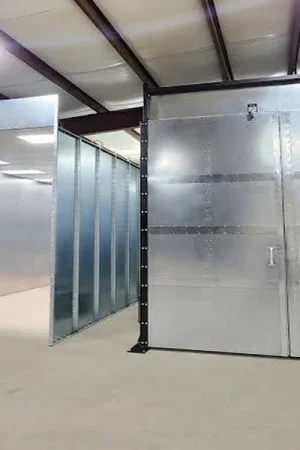
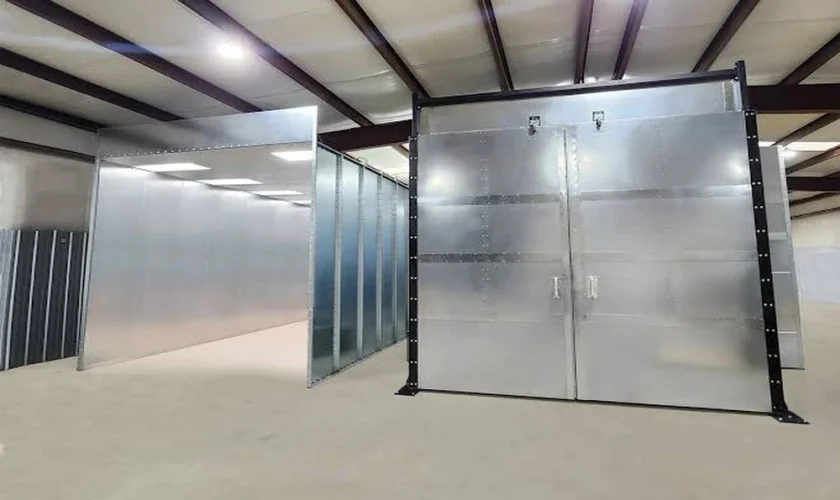
Larger products can quickly outgrow the original spray area, especially when a shop begins taking on taller frames, longer weldments, or wider fabricated assemblies. Modular wall and roof extensions can give a powder coating booth more usable height, width, or length while preserving the basic structure of the existing finishing area and avoiding an unnecessary full replacement.
Additional booth space can also improve gun access and reduce awkward part positioning during application. For growing shops, Reliant powder coating equipment can support business growth by allowing facilities to plan around changing part dimensions instead of replacing an otherwise useful booth simply because the product mix has changed.
Can Curing Capacity Grow Along With Production?
Higher throughput often places the greatest pressure on the oven because coated racks can accumulate faster than dense loads can reach cure temperature. Adding or upsizing Reliant powder coating ovens gives a manufacturer more room to process increased volume while keeping booth output from turning into a queue outside the curing area during demanding shifts.
Future oven planning should consider part weight, rack density, door openings, heat recovery, and daily batch count rather than chamber size alone. Businesses using a Reliant industrial powder coating oven can handle heavier or larger work when expansion moves production beyond the thermal capacity of a smaller batch setup.
Filtration Upgrades Can Extend Booth Performance
Changing production volume can increase filter loading, powder use, and airflow demand even when the booth enclosure still fits the work. Cartridge filtration modules, multi-stage filters, and adjustable fan controls can improve how Reliant powder coating systems manage overspray and maintain useful airflow as coating activity increases across longer production schedules.
Variable frequency drives can also let operators fine-tune exhaust velocity instead of running the fan at one fixed setting. Better airflow control may help businesses protect application consistency, manage filter life, and adapt booth performance to different operating conditions without adding an entirely separate spray area.
Material Handling Can Expand Without a Full Conveyor Loop
Manual carts work well at lower volumes, but heavier parts and more frequent batches can make repeated lifting and repositioning expensive in labor. Floor tracks, overhead rails, split-top booth openings, and other handling additions can move parts through preparation, coating, and curing along a straighter path with fewer transfers.
Linear systems are especially useful where floor space cannot support the sweeping curves of a large automatic conveyor. Coordinated use of a Reliant powder coating equipment package can help a growing shop align racks, booth access, oven doors, and tracking methods so more work moves through the same footprint with fewer handling delays.
Pretreatment Can Be Added as Finish Requirements Increase
New customers may bring stricter corrosion, adhesion, or appearance requirements that a basic cleaning process cannot support. Multi-stage washers, spray wands, steam cleaning equipment, or blasting areas can be added upstream so the coating line prepares metal more consistently before powder reaches the surface and before higher-value jobs enter production.
Stronger pretreatment capacity also protects the value of later equipment upgrades because a faster booth and larger oven cannot correct contamination left on the substrate. Manufacturers can build Reliant powder coating systems around a more complete preparation process, helping the business pursue jobs that require tighter finish specifications or longer service life.
Automation Can Be Introduced in Stages
Growing order volume does not always justify converting an entire batch operation into a fully automated line. Reciprocators, automatic gun arrays, dedicated powder delivery components, or powered handling sections can be added where repetitive work consumes the most labor while manual flexibility remains available for short runs and unusual parts.
Targeted automation can increase consistency on recurring parts without forcing every product through the same fixed sequence. Shops comparing a Reliant powder coating oven for sale can also coordinate future automation with cure capacity, ensuring faster application does not simply shift the bottleneck to the heating stage.
Utilities and Layout Should Leave Room for the Next Upgrade
Electrical service, gas supply, compressed air, ventilation, and open floor area can limit expansion more than the equipment itself. Early layout decisions should leave reasonable access around controls, filters, burners, doors, and maintenance areas while reserving space for additional racks, tracks, or Reliant powder curing ovens as production grows.
Long-term planning becomes easier when the original equipment is selected with growth in mind. Through Reliant Finishing Systems, manufacturers can evaluate Reliant powder coating equipment and system configurations for added booth capacity, curing capability, filtration, handling, pretreatment, or automation, giving businesses a practical path to expand without treating each new requirement as a complete restart.