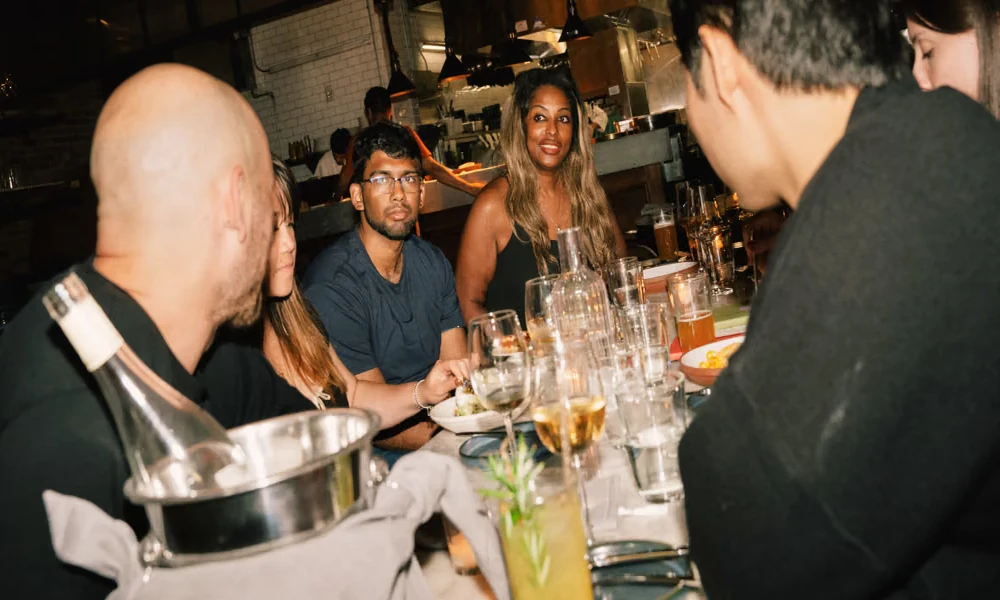
Most group dinners die in the group chat. Someone suggests a restaurant, three people say “sounds good,” two suggest something else, and by the next morning the plan has quietly evaporated. The fix isn’t a bigger calendar invite. It’s picking a format that creates its own energy, so people show up already curious instead of mildly obligated.
That’s why boil-style seafood spots have quietly become the go-to for office send-offs, family reunions, and birthdays that need a little theater. A place like Angry Crab Shack hands out bibs, covers the tables in paper, and lets guests pick their own sauce heat, which turns a normal dinner into something people actually remember. The rest of this guide is about how to build a plan around that kind of venue without overthinking it.
I’ve watched two kinds of group dinners fail. The formal restaurant where everyone whispers and leaves early, and the “let’s just pick a place” plan that ends with a party of twelve squeezed into a four-top because nobody confirmed anything.
Why some group dinners land and others fizzle
Lingering is the whole game. A dinner that people remember is one where folks stay past dessert, wander across tables, and finish each other’s fries. That only happens when the room gives them permission to relax. A white tablecloth and a quiet dining room work against you here. So does a menu that forces every guest to commit to an expensive entree they might not want.
What works is a meal built around shared food and a little controlled mess. If your hands are covered in garlic butter, you can’t be glued to your phone. You also can’t politely ignore the person across the table, because you’re both wrestling the same bucket of crab legs. That’s a feature, not a distraction.
The format does most of the emotional labor for you. Your only job is to pick the right venue and set the guest list up to succeed.
Use the Order-Share-Mingle framework
Here’s the planning structure I’ve landed on after years of event dinners. I call it Order-Share-Mingle, and it maps to three decisions you make before you ever send the invite.
- Order around a format, not a fixed menu. Guests choose their protein and their heat level, so picky eaters and spice fiends sit comfortably together.
- Share the messy stuff. Big boils and platters pass across the table and give introverts a natural conversation prop.
- Mingle in a space that lets people move. A venue with room for groups keeps the room alive after the plates are cleared.
The framework exists because it inverts how most people plan. Instead of booking a room and then hoping the meal creates energy, you start with the meal type and let it drive the venue choice. That single shift fixes about 80 percent of the problems that make group dinners awkward.
Pick a venue that fits the group you actually have
Be honest about your crowd. A birthday with fifteen adults, six kids, and two vegetarians has very different requirements than a business dinner for eight. The good news is boil-style restaurants have gotten smart about this. Plenty of them offer wings, burgers, po’boys, and vegetarian options alongside the shellfish, so nobody’s stuck ordering a house salad and looking sad.
Location logistics matter more than you think. Recent figures from the U.S. Census Bureau show that Americans commute heavily and travel for routine errands, so a venue that’s a scenic 45-minute drive away will quietly shrink your headcount. Pick something central to the group.
Here’s how I’d rank the three main formats if you’re deciding right now:
| Format | Best for | The catch |
|---|---|---|
| Boil or shared-platter spot | Mixed-age groups, birthdays, team celebrations | Not ideal for anyone who hates mess or shellfish |
| Traditional sit-down restaurant | Very formal client dinners | Rarely gets people mingling |
| Catering at your own space | Large groups, 30 or more | You handle setup and cleanup |
If I’m planning a group dinner for a team or a big family, I’d take the boil format every time. It’s more fun, it feeds more people, and the food becomes the activity instead of a backdrop.
A five-step checklist to run before the invite goes out
You don’t need a spreadsheet. You need these five decisions locked down before you hit send:
- Count the real guests. Not the maybe list. Use a quick poll and treat non-answers as no.
- Confirm the headcount limit. Ask the venue directly whether they can seat your group, and whether a reservation or deposit is needed.
- Flag dietary needs up front. Ask about allergies and vegetarian guests before you pick, not the day of.
- Pick one time slot. Give people a single option instead of a range. Choice invites delay.
- Set a cost expectation. A rough per-person number stops sticker shock and awkward check-splitting.
Notice there’s no step about centerpieces or nametags. Most group dinners fall apart on logistics, not decor. Nail the boring stuff and the fun takes care of itself.
The thing nobody budgets for: time
People overplan the food and underplan the flow. A dinner that breaks up at 8 p.m. is a scheduling conflict. A dinner that runs to 10 because nobody wants to leave is a win. The difference is usually whether there’s room to move and something to do with your hands.
National parks and public lands welcome hundreds of millions of visits every year according to the National Park Service, and there’s a reason people gather outdoors more than in squeaky dining rooms. Shared space loosens people up. You can replicate a little of that by choosing a venue with space between tables so your group can actually talk across the room.
Yes, you can do it without a restaurant
Sometimes the most memorable option is the one you host yourself. Catering that brings the same boil-style food to your backyard or office conference room works well for groups in the 30 to 300 range. You get the menu, the bibs, and the cleanup done by someone else, and people get to wander freely. I’d pick this for anything bigger than a single long table, because a crowd of forty at a restaurant means splitting the group and killing the mingling.
Send the invite and let the food work
All the planning in the world won’t beat a format that creates its own conversations. Pick a venue with shared food, messy hands, and room to move, lock your headcount and time, and let the group do the rest. The meal is the icebreaker; you’re just the person who booked it.
If you’re watching the group chat stall out this week, stop asking people what they want and give them a plan worth showing up for. Start with the venue and work backward. Your future self, the one not tracking down sixteen RSVPs, will thank you.