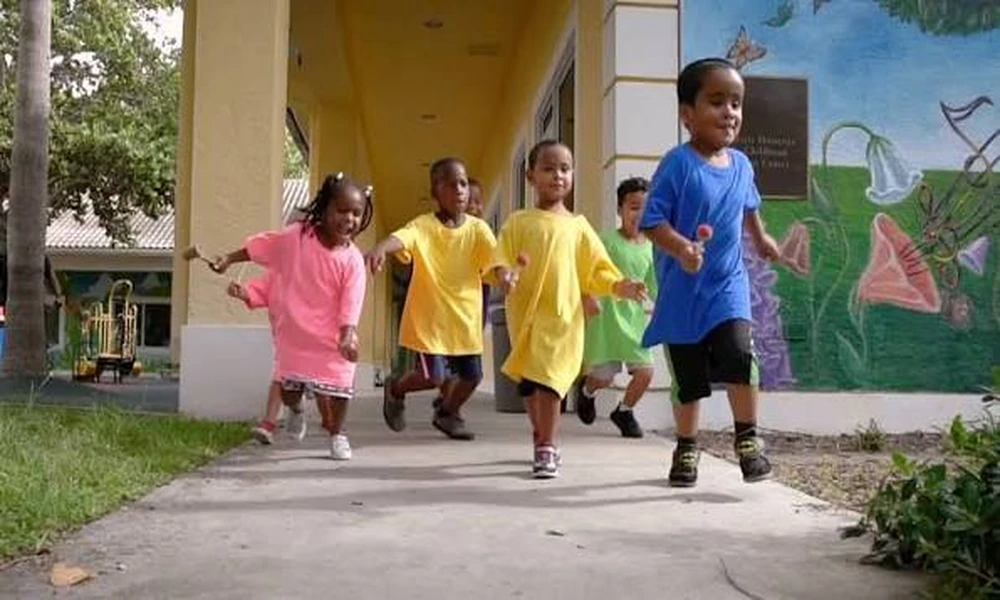
Most parents tour four preschools, fall in love with the one that smells like fresh paint, and sign a contract based on a feeling they cannot explain three weeks later. I have watched friends do exactly this. The building with the nicest playground won twice, and both times the family switched schools before winter break.
Here is the thing that actually separates a good preschool from a great one: what happens on a Tuesday in February, not what happens during a scheduled 10 a.m. tour. Accreditation, teacher tenure, and the daily rhythm of the room tell you far more than a welcome packet ever will. If you want a shortcut to the top of your list, programs like this NAEYC accredited preschool and VPK in Fort Lauderdale start you in the right pile because they have already cleared a bar most schools never attempt.
So let’s get specific. Below is the checklist I would use, in the order I would use it.
The accreditation filter, and why it cuts your list in half
Accreditation is not a sticker. It is a multi year process where an outside body inspects your classrooms, your staff files, and your safety drills, then comes back to check again. The National Association for the Education of Young Children runs the best known version of this in the United States, and its standards cover ten areas, from health and safety to curriculum to how teachers talk to children.
What does that mean for you as a parent? It means someone with no financial stake in your decision already walked the halls and asked hard questions. A school can have a gorgeous sign and a terrible ratio. Accreditation is the closest thing to a neutral referee you get.
Florida adds its own layer. The state’s Office of Early Learning oversees the Voluntary Prekindergarten program, which is free for eligible four year olds and follows a required set of early literacy standards. VPK is not the same as accreditation, and plenty of accredited schools run VPK classrooms. When a program carries both, you are getting state standards plus independent verification.
My honest take: if a school is not accredited and has no plans to pursue it, ask why. Sometimes the answer is reasonable. Often it is not.
Teacher turnover tells you everything
Ask one question on every tour: how long has your lead teacher been here? Then ask it about the assistant teachers.
A classroom where the adults change every six months is not a classroom. It is a rotating door with finger paint. Young children build trust through repetition, and a familiar face at drop off does more for a three year old’s sense of security than any curriculum binder. When you hear “our lead has been with us for nine years,” that is worth more than a new sensory room.
Watch for the follow up too. Schools that retain staff usually pay them better, train them more, and give them planning time. You can ask about all three without being nosy. Directors who run good programs are proud to answer.
What to actually look at during a tour
Stop looking at the furniture. Start looking at the walls, the floor, and the children’s faces.
- Children’s work at eye level. Real scribbles and uneven glue lines, not thirty identical worksheets. Process over product is a phrase you will hear from good programs, and the walls prove whether they mean it.
- Teachers down on the floor. If every adult is standing and watching, that is supervision, not teaching.
- A posted daily schedule. Predictable routines help kids feel safe. Chaos dressed up as flexibility is a warning sign.
- Openness about ratios. A director who quotes their classroom ratios without checking a clipboard has nothing to hide.
Ask to visit during a normal morning, not a showcase event. Touring at 9:30 a.m. on a Wednesday gives you a real picture. Touring during a holiday party gives you a performance.
Questions that get you a real answer
Skip “what’s your philosophy.” Everyone says play based. Try these instead.
- How do you handle it when a child bites or hits another child?
- What does communication with families look like on a normal week?
- How do you decide when a child is ready for the next room?
- What is your sick policy, and who enforces it?
The bite question is my favorite. Calm, specific answers mean the staff has training and practice. Vague answers mean they are improvising, and your child is the experiment.
Cost, schedules, and the logistics nobody mentions
Preschool pricing in South Florida varies widely, and the range surprises most first time parents. Tuition depends on whether you need part time or full time, whether the program runs year round or follows the school calendar, and whether meals are included.
Two things worth knowing before you compare numbers. First, family budgets and household sizes in this region shift a lot from neighborhood to neighborhood, which is one reason aid programs exist at all; the U.S. Census Bureau publishes the regional data that many of those programs use to set eligibility. Second, year round care is a different product than a September to June program, and comparing their sticker prices is apples to oranges if you work full time.
Ask about the calendar in plain terms. How many weeks off? Do you close for spring break? What happens in August? A school that closes for six weeks in summer is fine if you have a plan and miserable if you do not.
A quick decision framework
Here is the short version I hand to friends, which I call the Tuesday Test.
| Signal | Green flag | Yellow flag |
|---|---|---|
| Accreditation | NAEYC accredited | “Working on it” with no date |
| Lead teacher tenure | Three or more years | Under one year, high turnover |
| VPK status | State approved provider | Unclear or avoided |
| Tour timing | Any normal weekday morning | Only during events |
| Child engagement | Kids absorbed in play | Kids sitting quietly in rows |
Score a school on those five rows and you will know more than a brochure could ever tell you. Nobody needs a perfect score across the board. Two yellow flags and I would keep looking.
Trust the visit over the checklist
Checklists get you to the right five schools. The visit decides it. Sit in the parking lot for ten minutes before your tour and watch how families say goodbye at drop off. Are kids walking in happily? Are parents lingering at the door, or leaving relaxed? That is your real data.
And you are allowed to change your mind after you enroll. Plenty of families move their child after a few months because the fit was wrong, and that is not failure. It is parenting. What you want is to make the first choice well enough that a switch becomes unnecessary.
So call two programs this week, schedule a morning visit at each, and bring the Tuesday Test with you. Your child will spend more waking hours in that room than almost anywhere else, and the room they remember will be the one with the teachers who knew their name.