close

June 2025

Casino

Instant Win Slots: How They Work and Why They’re Gaining Popularity

Ever dreamed of hitting a jackpot with just a click? Imagine seconds from spin to win—you don’t even have time to blink. That’s the thrill of instant win slots—fast, exciting, and irresistible. Ready for a heart-pounding ride? Let’s explore what makes these games so electrifying.

Online casinos have revolutionised gaming with instant win slots, offering lightning-fast gameplay and immediate rewards. Unlike traditional reel spins, these games deliver results within seconds, making them perfect for today’s busy players. In this guide, we’ll explain how they function, why they’re catching fire, and how you can enjoy them smartly and safely.

What Are Instant Win Slots?

Slot games are designed for immediate results—no waiting for spins or bonus rounds.

How They Differ from Traditional Slots

  • No reel spinning animations—outcomes displayed instantly
  • Quick decision-making, faster game cycles
  • Simple formats are ideal for mobile play

Common Themes and Formats

  • Scratch-off style reveals
  • Card-matching mini-games
  • Mystery boxes or treasure chests

Behind the Scenes – Technology & Mechanics

Explore the tech magic powering instant play and real-time payouts.

Random Number Generators (RNGs)

  • Ensure fair, unpredictable outcomes
  • Use algorithms to mimic randomness.

Instant Payout Processing

  • Seamless backend integration with player accounts
  • Real-time win notifications

What Fuels the Popularity Surge

Speed, convenience, and mobile-friendly play are boosting player adoption.

Fast-Paced Entertainment

  • Quick gameplay fits modern attention spans
  • Ideal for short breaks or quick fun

Optimised for Mobile Users

  • Smartphone screens match the game format
  • Minimal data usage, fast loading

Exploring Game Variety

Instant win slots come in many formats to suit different player moods.

Virtual Scratch Cards

  • Emulate the physical lottery ticket experience
  • Simple reveal mechanics

Match-to-Win Games

  • Pick-and-match themes
  • Interactive, engaging visuals

Mystery Prize Boxes

  • Choose boxes to unveil prizes
  • Surprise and delight in every click

Strategy vs. Chance – What Matters More?

Determine if skill or luck drives your instant game success.

Pure RNG Luck

  • No skill can influence results
  • Each play is independent.

Money Management Tactics

  • Set daily budgets
  • Know when to quit

Choosing Higher RTP Games

  • Look for a return-to-player percentage
  • Even small RTP differences impact long-term play

Safety & Fairness in Instant Win Slots

Stay secure by choosing reliable platforms and protecting your experience.

Licensing and Regulation

  • Choose casinos with valid gaming licenses
  • Regulatory oversight = player safety

Security Measures

  • SSL encryption should be standard
  • Check for accidental logouts or redirects.

Promoting Responsible Play

  • Use self-exclusion tools
  • Stick to predefined loss and win limits

Tips for Smarter Play

Enhance your enjoyment and manage your bankroll with strategic gameplay tactics.

Start Small and Test

  • Only play with amounts you can lose
  • Explore free trial modes.

Track Wins and Losses

  • Keep a simple log
  • Adjust play strategies based on data.

Look for Bonuses

  • Opt into offers for instant games.
  • Factor bonus terms into your session

Play with Intent, Stop on Time

  • Have clear play goals
  • Avoid chasing losses

Conclusion: Fast Fun, Smart Choices

Instant win slots combine thrill, convenience, and a modern pace that aligns perfectly with today’s lifestyle. Their simple gameplay and rapid results make them highly attractive, and knowing how they work helps you harness their enjoyment responsibly. Always check RTP, pick licensed platforms, and manage your bankroll wisely.

Curious to try one? Start with low-stake instant games at trusted online casinos and experience fast wins + big fun—while keeping gaming balanced and smart.

read more
Health

Seeing What Hurts: How CT and MRI Scans Help Pinpoint Pain at the Source

neurological care.

Understanding CT and MRI Scans

CT (Computed Tomography) and MRI (Magnetic Resonance Imaging) scans have transformed medical diagnostics by offering detailed, non-invasive views of the body’s internal structures. These imaging tools help doctors pinpoint the causes of pain and disease with greater accuracy, enabling more effective treatment plans.

CT scans, also called CAT scans, use X-ray technology to produce cross-sectional images of bones and dense tissues. Ideal for detecting fractures, tumors, and abnormalities, they provide rapid results, making them essential in emergencies.

MRI scans, by contrast, use powerful magnets and radio waves, without radiation, to capture highly detailed images of soft tissues like muscles, ligaments, and the brain. Though typically longer in duration, MRI is crucial for diagnosing complex conditions involving soft tissue.

Common Uses Of CT and MRI in Diagnosing Pain

CT and MRI scans are essential in diagnosing pain by providing detailed images that identify underlying causes. CT scans are often used in emergencies, such as trauma from accidents, to quickly detect fractures, internal bleeding, and organ damage. MRI scans, with their superior soft tissue imaging, are commonly used for chronic pain conditions, such as back pain, to assess intervertebral discs, spinal cord, and soft tissues, helping to identify issues like herniated discs or nerve compression—findings that may guide ongoing care under the supervision of a spine doctor. Both imaging methods are also vital for diagnosing pain related to internal organs. CT scans can detect conditions like kidney stones or appendicitis, causing abdominal pain, while MRIs are crucial for evaluating brain-related pain, including tumors or aneurysms, in neurological cases. By offering precise images, CT and MRI scans enable targeted treatments by uncovering the true source of pain.

The Science Behind Imaging Techniques

CT and MRI scans transform internal body structures into visible images, aiding in accurate diagnosis. CT scans use X-rays from different angles to create detailed images of bones, dense tissues, and organs in motion, making them ideal for emergencies. MRI scans use magnetic fields and radiofrequency to produce precise images of soft tissues, offering customizable imaging for different tissue types.

These technologies have advanced medical science, improving diagnosis and enabling personalized medicine. As technology progresses, CT and MRI scans will continue to enhance our ability to diagnose and treat pain.

How CT Scans Work: A Closer Look

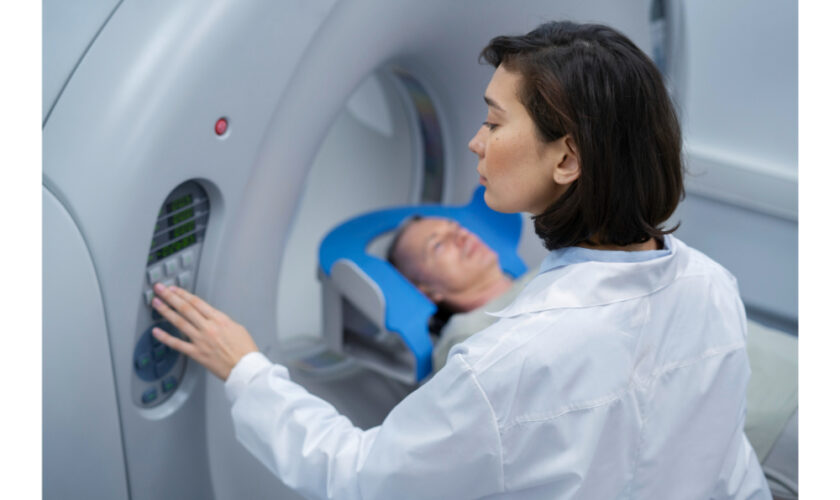
CT scans use X-ray technology and computer processing to create detailed cross-sectional images. The patient lies on a motorized table that slides into a doughnut-shaped machine, where a rotating X-ray tube captures images from various angles, which are then processed into slices or a 3D image.

CT scans are fast, typically taking just a few minutes, with the scan itself lasting under a minute. This speed is crucial in emergencies, such as trauma or acute conditions. Contrast agents can be used to enhance the visibility of blood vessels, organs, and tumors.

While CT scans involve exposure to ionizing radiation, modern technology has reduced radiation levels while maintaining image quality. The decision to use a CT scan is carefully considered to ensure accurate diagnoses, making it a vital diagnostic tool.

The Role Of Imaging In Pain Management

Advanced imaging techniques like CT and MRI scans have significantly improved pain management by providing detailed views that support accurate diagnoses and targeted treatments. In cases of chronic back pain, identifying conditions such as herniated discs allows for care that directly addresses the source of discomfort. When symptoms are complex or hard to pinpoint, musculoskeletal and spinal imaging can offer valuable insight into issues affecting joints, nerves, or spinal structures. These scans also play a quiet yet important role in guiding minimally invasive procedures and surgical planning—CT scans help with spinal injection placement, while MRIs support pre-surgical evaluations. Continued imaging helps track progress over time, enabling timely adjustments to treatment. With these tools, healthcare providers can offer more precise and personalized pain management.

MRI Scans Explained: What To Expect

An MRI scan uses a strong magnetic field to create detailed images of the body. Patients change into a hospital gown, remove metal objects, and lie on a table that slides into the cylindrical machine. Staying still is crucial for clear images.

MRI is non-invasive and doesn’t involve radiation, making it safe for repeated use. However, the machine can be loud, producing thumping and tapping sounds. Earplugs or headphones are provided, and some facilities offer music for added comfort. Scan times usually range from 30 to 60 minutes.

In some cases, a contrast agent is injected to enhance the visibility of certain tissues. While generally safe, patients with implants like pacemakers may not be eligible. MRI is essential for diagnosing soft tissue conditions such as joint injuries or neurological disorders.

Comparing CT and MRI: Which Is Right For You?

Choosing between a CT scan and an MRI depends on the medical issue, the area being examined, and the urgency. CT scans are ideal for emergencies, offering quick images of bones and dense tissues, and are useful for diagnosing fractures, internal bleeding, and certain tumors.

MRI scans are better for evaluating soft tissues and complex structures like the brain, spinal cord, and joints, providing superior detail for conditions such as herniated discs, ligament tears, and brain abnormalities. MRI is also a safer option for repeated imaging, as it doesn’t involve radiation, which is important for children or long-term monitoring.

Ultimately, the choice between CT and MRI depends on the specific diagnosis, and both may sometimes be used together. Consulting a healthcare provider ensures the most appropriate imaging method is selected for the patient’s needs and safety.

Limitations And Risks Of CT and MRI Scans

CT and MRI scans are vital tools in modern medicine, but come with certain limitations and risks. CT scans expose patients to ionizing radiation, which, although reduced in modern technology, can still pose a risk, particularly for vulnerable groups like children and pregnant women. MRI scans, on the other hand, do not use radiation but can be unsafe for individuals with metal implants such as pacemakers, and the confined space of the MRI machine can cause discomfort for those with claustrophobia. Both imaging techniques also have limitations in resolution and specificity, sometimes requiring additional tests to confirm a diagnosis. Furthermore, accurate interpretation of scan results demands expertise to avoid subtle findings being missed or misinterpreted. Despite these challenges, CT and MRI scans remain invaluable tools in diagnosing a wide range of conditions, with continuous technological advancements improving their safety and diagnostic precision.

Advances In Imaging Technology And Their Impact On Diagnosis

Recent advancements in medical imaging have enhanced the capabilities of CT and MRI scans. Higher image resolution allows for detecting smaller structures like tumors and fractures, leading to more accurate diagnoses. Functional MRI (fMRI) now offers insights into brain activity by measuring blood flow, which helps in understanding neurological disorders and brain-related pain, guiding treatment approaches used by specialists in neurological care. Hybrid imaging technologies, such as PET/MRI, combine strengths from different modalities, providing comprehensive diagnostic information.

Artificial intelligence (AI) is also transforming the field by assisting in image interpretation, detecting patterns and anomalies that may be overlooked by humans. This improves diagnostic accuracy and speeds up the process, leading to more efficient and personalized care. As these technologies evolve, they continue to improve pain diagnosis and management, offering better opportunities for early intervention and enhanced patient outcomes.

Conclusion: The Future Of Pain Diagnosis With Imaging Techniques

The future of CT and MRI scans in pain diagnosis and management is promising, with ongoing advancements in technology enhancing precision and personalization. Improved image resolution, functional imaging, and AI integration will lead to more accurate diagnoses and better treatment outcomes. These tools not only help pinpoint pain sources but also provide patients with a clearer understanding of their conditions.

As technology continues to advance, healthcare providers will be able to offer more effective and compassionate care, improving the quality of life for many. In conclusion, CT and MRI scans are revolutionizing pain diagnosis, and with continued progress, they will guide us toward a pain-free future.

read more
Health

How do online specialist referrals work with private health insurance?

Online specialist referrals streamline the traditional healthcare pathway by connecting patients with appropriate specialists through digital platforms while maintaining insurance compliance requirements. Private health insurance policies typically require specific referral protocols to ensure coverage for specialist consultations and subsequent treatments. These digital systems automate much of the administrative burden while preserving the medical oversight for insurance approval. The specialist referral online process integrates directly with insurance verification systems, allowing real-time confirmation of coverage eligibility and required documentation. This integration eliminates many delays associated with traditional paper-based referral systems while ensuring all insurance requirements are met before specialist appointments are scheduled.

Digital pathway coordination

Online referral systems establish secure connections between primary care providers, specialists, and insurance networks to facilitate seamless patient transitions. These platforms verify patient insurance status automatically while matching medical needs with appropriate specialist availability within approved provider networks. The digital coordination reduces administrative overhead while maintaining clinical oversight throughout the referral process. The NextClinic demonstrate how technology can bridge the gap between primary care and specialist services while preserving insurance compliance requirements. These systems track referral status in real time and provide automatic updates to all parties involved in patient care coordination. The automation ensures nothing falls through administrative cracks while maintaining the medical supervision insurance policies require.

Insurance verification process

  • Real-time eligibility checking confirms active coverage and specialist benefit availability before appointments
  • Prior authorization automation submits required documentation directly to insurance reviewers through secure channels
  • Network provider validation ensures chosen specialists participate in patient insurance plans for maximum coverage
  • Benefit calculation tools provide cost estimates, including deductibles, copayments, and coverage limitations
  • Documentation compilation gathers all required medical records and referral justifications in standardized formats
  • Appeal preparation systems organize information for insurance disputes when initial approvals are denied

Timeframe expectations

Insurance-compliant online referrals are typically processed within 24-48 hours for routine specialist appointments, though urgent cases may receive expedited review. The digital submission eliminates postal delays, while automated systems immediately flag incomplete documentation or missing information. Emergency referrals bypass standard review processes but still require proper documentation for insurance billing purposes. Complex referrals requiring prior authorization may extend processing times to 5-10 business days while insurance reviewers evaluate medical necessity. The online systems provide status tracking that informs patients and providers about approval progress. Specialist scheduling often begins immediately after insurance approval confirmation, reducing overall wait times compared to traditional referral methods.

Documentation requirements

Comprehensive medical records form the foundation of successful insurance-approved specialist referrals through online platforms. Primary care providers must document symptom progression, treatment attempts, and medical reasoning that supports specialist consultation necessity. These records undergo automatic formatting to meet specific insurance documentation standards while preserving clinical detail. Digital systems compile patient histories, diagnostic results, and treatment summaries into standardized formats that insurance reviewers expect.

The automation reduces documentation errors while ensuring all required information accompanies referral submissions. Missing documentation triggers automatic alerts that prevent processing delays caused by incomplete submissions. Online platforms also maintain audit trails documenting every step of the referral process for compliance purposes. These records prove insurance requirements were met while providing appeal documentation if coverage disputes arise. The comprehensive tracking protects patients and providers while ensuring transparent communication with insurance networks throughout the specialist referral process.

read more
Home

The Dangers of Laying New Pond Liners Over Old Ones

It is tempting to take a shortcut—simply put a new liner over the old one and call it a day—when a pond liner starts to leak or disintegrate. It sounds simpler, quicker, and maybe even less expensive, but actually it’s a risky step that might generate more issues than it resolves. This is one area you should not cut if you are serious about keeping a healthy and long-lasting pond.

Many pond keepers have made the error of layering liners only to have unanticipated effects down the line. Though even the best equipment cannot make up for a weak basis, companies like Evolution Aqua Nexus provide sophisticated filtration systems created to maintain clean, healthy ponds. Starting from the ground up—which includes the liner—as That Pond Guy often emphasizes in his guidance, pond success

1. Decay Pockets and Trapped Debris

Laying a new liner on top of an old one is fundamentally making an undesirable sandwich; trapped between the two layers could be organic debris, algae, and filth. This waste decomposes over time to leave decaying cavities. These pockets can cause dangerous gases like hydrogen sulfide and methane, which might bubble up and so compromise the water quality of your pond—or worse, kill your fish.

Especially perilous if the old liner has tears or folds that let soil and plant material below it pass. Once hidden, those spots grow into anaerobic sludge and bacterial breeding grounds. Aside from being uncomfortable, this might also beneath upset your fresh liner.

2. Concealed Sharp Objects

Liners first go out from punctures from rocks, roots, or sharp trash, among several causes. Those dangers still lurk underneath if you do not completely remove the ancient liner. Though your new liner seems strong, sooner or later the water above will put pressure on it and create a sharp edge underneath.

It’s like laying a fresh carpet over shattered glass; sure, it seems good at first, but step in the wrong place and you’re going to feel it. Weight, erosion, and shifting ground can force the sharp rubbish upward over time, piercing both liners and causing hard-to-find leaks.

3. Poor Fit and Limited Flexibility

Each pond has somewhat different contours. Adding a fresh liner over an older one produces ungainly shapes and uneven surfaces. Particularly close to shelves and corners, the fresh liner may not settle well in the curves or ledges of your pond. This results in folds, air pockets, and stress points that impair the liner’s capacity to bend under water pressure or temperature swings.

Reduced flexibility raises the odds of later rips or tears, especially during freezethaw cycles. A badly fitted liner is almost a ticking time bomb if your area experiences cold winters.

4. Missed Chance for a New Beginning

Though it’s a major effort, changing a liner is also a great moment to examine and enhance the other components of your pond system. Putting a fresh liner allows you to change your pond, add superior plumbing, or move to a modern filtration system. If you are only covering up issues rather than really fixing them, these improvements are much more difficult.

In Conclusion

While wanting to go the simple path is not embarrassing, shortcuts with pond liners cause failures. Although it may seem wise at the time, laying a fresh liner over an old one can have concealed hazards—trapped trash, sharp items, poor fit, and missed chances—that may bite you.

read more
Business

How HVAC Masters Can Help You Save on Energy Bills

Managing energy costs can be challenging, especially when heating and cooling systems consume a significant portion of household expenses. Efficient HVAC systems play a crucial role in reducing these bills while maintaining comfort. Knowing how to optimize these systems often requires expertise that goes beyond basic knowledge.

Working with professionals like Collins Comfort Maters ensures that heating, ventilation, and air conditioning units operate at peak efficiency. Their specialized skills help identify inefficiencies, recommend improvements, and carry out precise maintenance. This article will discuss how experts in HVAC can help homeowners save money on energy costs through smart solutions and proper care.

Diagnosing and Repairing Inefficient Systems

One of the primary ways HVAC specialists contribute to energy savings is through accurate diagnosis of system problems. Older or malfunctioning units often waste energy by running longer or harder than necessary. Skilled technicians use advanced tools to detect leaks, blockages, or worn-out components that reduce efficiency.

By addressing these issues promptly, experts restore system performance and prevent unnecessary energy consumption. Regular inspections and timely repairs keep equipment running smoothly, avoiding costly breakdowns and high utility bills.

Upgrading to Energy-Efficient Equipment

Replacing outdated HVAC systems with modern, energy-efficient models is another way to reduce expenses. Professionals assess current setups and recommend units that meet energy standards without compromising comfort. New systems often feature programmable thermostats, variable speed motors, and improved refrigerants that lower power use.

Investing in updated technology not only cuts monthly bills but may also qualify for tax incentives or rebates. Knowledgeable HVAC providers guide homeowners through the selection process, ensuring the best fit for their needs and budgets.

Optimizing System Settings and Usage

Experts also help optimize existing equipment through proper configuration and smart usage practices. Setting thermostats correctly, sealing ducts, and adjusting airflow can dramatically improve energy efficiency. Professionals educate clients on habits that reduce waste, such as maintaining consistent temperatures and scheduling system downtime when spaces are unoccupied.

These simple yet effective adjustments empower homeowners to control energy costs without sacrificing comfort. Guidance from HVAC masters ensures that settings are tailored to individual homes and lifestyles for maximum benefit.

Benefits of Regular Maintenance

Routine maintenance is essential for sustaining system efficiency over time. Technicians clean filters, check refrigerant levels and inspect electrical components to prevent deterioration. Regular tune-ups reduce strain on equipment and extend its lifespan.

Maintenance plans offered by providers like Collins Comfort Masters help customers stay on schedule with these vital services. Consistent care minimizes the risk of unexpected failures and keeps energy consumption in check.

Practical Tips to Lower Energy Consumption

Beyond technical services, HVAC experts offer practical advice to complement system performance. These tips include:

  • Using ceiling fans to improve air circulation
  • Closing blinds and curtains during hot days
  • Insulating attics and walls to reduce heat transfer
  • Installing programmable thermostats for precise temperature control
  • Scheduling service visits before peak seasons

Applying these recommendations alongside professional support amplifies energy savings and enhances comfort throughout the year.

Understanding the Role of Professional Consultation

Professional consultation is invaluable for homeowners unsure about their HVAC needs. Experts provide detailed assessments and transparent explanations of options. This guidance helps avoid costly mistakes such as oversizing systems or ignoring hidden problems.

HVAC Masters, for instance, offer personalized plans that align with both energy-saving goals and budget constraints. Their insights help customers make informed decisions that lead to long-term financial benefits.

Companies like Collins Comfort Masters demonstrate how expert HVAC services contribute significantly to reducing energy bills by improving system efficiency and offering sound advice. Engaging with skilled professionals ensures that heating and cooling systems operate optimally, saving money and enhancing home comfort. Homeowners who invest in expert care and upgrades can expect lasting reductions in utility costs and greater peace of mind.

read more