
Understanding CT and MRI Scans
CT (Computed Tomography) and MRI (Magnetic Resonance Imaging) scans have transformed medical diagnostics by offering detailed, non-invasive views of the body’s internal structures. These imaging tools help doctors pinpoint the causes of pain and disease with greater accuracy, enabling more effective treatment plans.
CT scans, also called CAT scans, use X-ray technology to produce cross-sectional images of bones and dense tissues. Ideal for detecting fractures, tumors, and abnormalities, they provide rapid results, making them essential in emergencies.
MRI scans, by contrast, use powerful magnets and radio waves, without radiation, to capture highly detailed images of soft tissues like muscles, ligaments, and the brain. Though typically longer in duration, MRI is crucial for diagnosing complex conditions involving soft tissue.
Common Uses Of CT and MRI in Diagnosing Pain
CT and MRI scans are essential in diagnosing pain by providing detailed images that identify underlying causes. CT scans are often used in emergencies, such as trauma from accidents, to quickly detect fractures, internal bleeding, and organ damage. MRI scans, with their superior soft tissue imaging, are commonly used for chronic pain conditions, such as back pain, to assess intervertebral discs, spinal cord, and soft tissues, helping to identify issues like herniated discs or nerve compression—findings that may guide ongoing care under the supervision of a spine doctor. Both imaging methods are also vital for diagnosing pain related to internal organs. CT scans can detect conditions like kidney stones or appendicitis, causing abdominal pain, while MRIs are crucial for evaluating brain-related pain, including tumors or aneurysms, in neurological cases. By offering precise images, CT and MRI scans enable targeted treatments by uncovering the true source of pain.
The Science Behind Imaging Techniques
CT and MRI scans transform internal body structures into visible images, aiding in accurate diagnosis. CT scans use X-rays from different angles to create detailed images of bones, dense tissues, and organs in motion, making them ideal for emergencies. MRI scans use magnetic fields and radiofrequency to produce precise images of soft tissues, offering customizable imaging for different tissue types.
These technologies have advanced medical science, improving diagnosis and enabling personalized medicine. As technology progresses, CT and MRI scans will continue to enhance our ability to diagnose and treat pain.
How CT Scans Work: A Closer Look
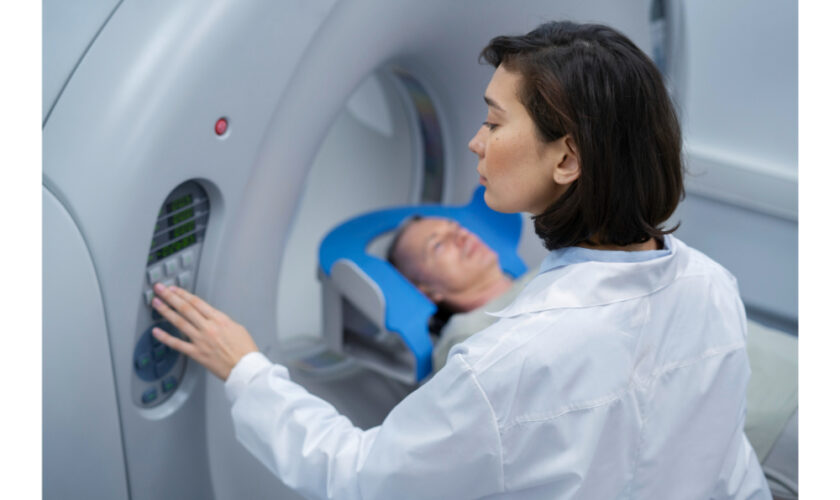
CT scans use X-ray technology and computer processing to create detailed cross-sectional images. The patient lies on a motorized table that slides into a doughnut-shaped machine, where a rotating X-ray tube captures images from various angles, which are then processed into slices or a 3D image.
CT scans are fast, typically taking just a few minutes, with the scan itself lasting under a minute. This speed is crucial in emergencies, such as trauma or acute conditions. Contrast agents can be used to enhance the visibility of blood vessels, organs, and tumors.
While CT scans involve exposure to ionizing radiation, modern technology has reduced radiation levels while maintaining image quality. The decision to use a CT scan is carefully considered to ensure accurate diagnoses, making it a vital diagnostic tool.
The Role Of Imaging In Pain Management
Advanced imaging techniques like CT and MRI scans have significantly improved pain management by providing detailed views that support accurate diagnoses and targeted treatments. In cases of chronic back pain, identifying conditions such as herniated discs allows for care that directly addresses the source of discomfort. When symptoms are complex or hard to pinpoint, musculoskeletal and spinal imaging can offer valuable insight into issues affecting joints, nerves, or spinal structures. These scans also play a quiet yet important role in guiding minimally invasive procedures and surgical planning—CT scans help with spinal injection placement, while MRIs support pre-surgical evaluations. Continued imaging helps track progress over time, enabling timely adjustments to treatment. With these tools, healthcare providers can offer more precise and personalized pain management.
MRI Scans Explained: What To Expect
An MRI scan uses a strong magnetic field to create detailed images of the body. Patients change into a hospital gown, remove metal objects, and lie on a table that slides into the cylindrical machine. Staying still is crucial for clear images.
MRI is non-invasive and doesn’t involve radiation, making it safe for repeated use. However, the machine can be loud, producing thumping and tapping sounds. Earplugs or headphones are provided, and some facilities offer music for added comfort. Scan times usually range from 30 to 60 minutes.
In some cases, a contrast agent is injected to enhance the visibility of certain tissues. While generally safe, patients with implants like pacemakers may not be eligible. MRI is essential for diagnosing soft tissue conditions such as joint injuries or neurological disorders.
Comparing CT and MRI: Which Is Right For You?
Choosing between a CT scan and an MRI depends on the medical issue, the area being examined, and the urgency. CT scans are ideal for emergencies, offering quick images of bones and dense tissues, and are useful for diagnosing fractures, internal bleeding, and certain tumors.
MRI scans are better for evaluating soft tissues and complex structures like the brain, spinal cord, and joints, providing superior detail for conditions such as herniated discs, ligament tears, and brain abnormalities. MRI is also a safer option for repeated imaging, as it doesn’t involve radiation, which is important for children or long-term monitoring.
Ultimately, the choice between CT and MRI depends on the specific diagnosis, and both may sometimes be used together. Consulting a healthcare provider ensures the most appropriate imaging method is selected for the patient’s needs and safety.
Limitations And Risks Of CT and MRI Scans
CT and MRI scans are vital tools in modern medicine, but come with certain limitations and risks. CT scans expose patients to ionizing radiation, which, although reduced in modern technology, can still pose a risk, particularly for vulnerable groups like children and pregnant women. MRI scans, on the other hand, do not use radiation but can be unsafe for individuals with metal implants such as pacemakers, and the confined space of the MRI machine can cause discomfort for those with claustrophobia. Both imaging techniques also have limitations in resolution and specificity, sometimes requiring additional tests to confirm a diagnosis. Furthermore, accurate interpretation of scan results demands expertise to avoid subtle findings being missed or misinterpreted. Despite these challenges, CT and MRI scans remain invaluable tools in diagnosing a wide range of conditions, with continuous technological advancements improving their safety and diagnostic precision.
Advances In Imaging Technology And Their Impact On Diagnosis
Recent advancements in medical imaging have enhanced the capabilities of CT and MRI scans. Higher image resolution allows for detecting smaller structures like tumors and fractures, leading to more accurate diagnoses. Functional MRI (fMRI) now offers insights into brain activity by measuring blood flow, which helps in understanding neurological disorders and brain-related pain, guiding treatment approaches used by specialists in neurological care. Hybrid imaging technologies, such as PET/MRI, combine strengths from different modalities, providing comprehensive diagnostic information.
Artificial intelligence (AI) is also transforming the field by assisting in image interpretation, detecting patterns and anomalies that may be overlooked by humans. This improves diagnostic accuracy and speeds up the process, leading to more efficient and personalized care. As these technologies evolve, they continue to improve pain diagnosis and management, offering better opportunities for early intervention and enhanced patient outcomes.
Conclusion: The Future Of Pain Diagnosis With Imaging Techniques
The future of CT and MRI scans in pain diagnosis and management is promising, with ongoing advancements in technology enhancing precision and personalization. Improved image resolution, functional imaging, and AI integration will lead to more accurate diagnoses and better treatment outcomes. These tools not only help pinpoint pain sources but also provide patients with a clearer understanding of their conditions.
As technology continues to advance, healthcare providers will be able to offer more effective and compassionate care, improving the quality of life for many. In conclusion, CT and MRI scans are revolutionizing pain diagnosis, and with continued progress, they will guide us toward a pain-free future.